Is a Dubai Property Correction Coming in 2026?
Is a Dubai property correction coming in 2026? For the past few years, Dubai’s property market has been one of the easiest markets to talk about. Prices were rising. Rents were rising. Off-plan launches were everywhere. Buyers were worried about missing the next opportunity. But 2026 feels different.
Not dramatically different. But different enough to make investors pause and ask a question that would have sounded almost uncomfortable a year ago:
Is Dubai’s property market finally due for a correction?
The honest answer is that the market is already showing some signs of cooling. The bigger question is whether this becomes a meaningful correction or simply the next phase of a market that has been growing at an unusually fast pace. And to answer that, we need to look at both sides of the equation: supply and demand.
The First Signs of Cooling Are Already Here
Dubai’s property market started 2026 strongly. According to the Dubai Land Department, real estate transactions reached AED 252 billion in Q1 2026, up 31% in value year-on-year, while transaction volumes increased 6%. That showed that investor activity had not disappeared despite a more complicated regional and global environment.
But Q2 told a slightly different story. Residential transactions slowed significantly.
Data shows that Dubai recorded around 34,850 residential transactions in Q2 2026, down 31% compared with Q2 2025. Transaction value also fell 45% year-on-year to AED 84.9 billion. Yet there is an important detail here. Q2 2026 was still Dubai’s third-highest Q2 on record.
So yes, activity has cooled. But calling it a collapse would be an exaggeration. The market is moving from an exceptionally strong phase into a more measured one.
Prices Are Cooling Too | But Not Collapsing
This is where the headlines can become misleading. When transaction volumes fall, people immediately start talking about a crash. But price data tells a more nuanced story.
CBRE’s Q2 2026 market review found that Dubai residential prices were still 1.9% higher year-on-year, although the pace of growth has slowed considerably. At the same time, average residential rents fell 6.2% quarter-on-quarter and were 2.6% lower than a year earlier. That is an important shift.
For several years, Dubai investors became accustomed to double-digit growth in both prices and rents. That environment is changing. But a market moving from double-digit growth to low single-digit growth is not the same thing as a market entering freefall.
Now Look at the Supply
Dubai is adding a significant amount of residential stock. Cushman & Wakefield Core reports that more than 13,200 residential units were delivered in Q2 2026, with another approximately 32,000 units expected to be delivered during the second half of the year.
And the pipeline extends well beyond 2026. DXB Interact’s Q2 data also shows that developers delivered 14,503 units across 52 projects, while 11,505 units were launched across 30 projects during the quarter.
In other words, more homes are actually reaching the market.That matters because supply is no longer just a future discussion. It is becoming visible on the ground. More completed apartments mean more options for buyers and tenants. And when buyers have more options, sellers cannot assume that every property will automatically appreciate.
But Is Dubai Overbuilding?
This is where the answer becomes less straightforward. Dubai has a large pipeline, but the emirate also continues to attract new residents, businesses, investors and international capital.The question is therefore not simply:
“Is there too much supply?”
The better question is:
“Is the new supply arriving in the right places and at the right price for the demand that exists?”
That distinction is critical.
A new development in an area with strong infrastructure, employment access, schools, retail, transport and lifestyle amenities can be absorbed very differently from hundreds of similar units entering a community at the same time. Dubai is not one property market. It is hundreds of micro-markets operating under the same citywide headline.
Demand Is Still There
Despite the slowdown in residential activity, demand has not disappeared. Bayut’s H1 2026 market report describes buyer interest as resilient across several key segments, with continued demand for apartments and particularly strong interest in a number of villa communities.
Dubai also continues to benefit from population growth and its position as a global business and investment hub. That creates an important floor underneath the residential market. People still need homes, Companies still need offices, Investors still want income-producing assets, and international buyers continue to look at Dubai as a place to diversify their property exposure.
So the demand is becoming more selective.
The Market Is Becoming More Selective
This may actually be the biggest change we are seeing in 2026. During a rising market, almost everything can look like a good investment.
When prices are moving quickly, investors are often willing to overlook things like location, developer track record, rental yield or future competition because they expect prices to keep rising. A more balanced market changes that behaviour.
Buyers start asking harder questions:
– What is the actual rental yield?
– How many similar units are coming into the community?
– Who is the developer?
– What is the service charge?
– How easy will it be to resell?
– Is there genuine end-user demand?
– And perhaps most importantly: Would I still want to own this property if prices stayed flat for two years?
That is a much healthier question.
Off-Plan Needs a Closer Look
Off-plan remains a major part of Dubai’s property market. But it is also the segment where investors need to be particularly careful about supply. If several developers launch similar apartments in the same area with similar layouts, amenities and payment plans, the buyer suddenly has choices. That changes the power dynamic. Developers have to compete for buyers and investors have to become better at comparing projects rather than simply buying the newest launch.
A strong developer in a strong location with genuine end-user demand can continue to perform. A project that depends almost entirely on future price appreciation is a different proposition. In 2026, the difference matters more than ever.
What Could Trigger a Bigger Correction?
There are a few things worth watching over the rest of 2026.
1. Actual handovers: The number of units actually delivered will matter more than the number announced. If handovers accelerate significantly while demand remains flat, competition between properties could increase.
2. Rental performance: Rents have already started to soften in 2026. If this continues, investors relying heavily on rental income will need to reassess their numbers.
3. Developer incentives: If we start seeing increasingly aggressive discounts, extended payment plans or other incentives across multiple projects, it could indicate that competition for buyers is increasing.
4. Resale prices: This is perhaps one of the clearest indicators.If investors who bought during the peak of the cycle begin selling below their original purchase prices, we could see more meaningful price adjustments in specific segments.
5. Population and employment growth: Supply only becomes a problem when it grows faster than the underlying demand. Dubai’s ability to continue attracting residents, businesses and capital will therefore remain one of the most important factors supporting the market.
So, Is a Correction Coming? Our view?
A correction is already beginning to appear in parts of the market, but a Dubai-wide crash is not what the current data suggests. The evidence points more towards a transition. Transaction volumes have slowed. Rental growth has softened. Price growth has moderated. Supply is increasing. And buyers are becoming more selective.
That is a correction of expectations as much as it is a correction of prices. After several years of exceptional growth, Dubai’s property market simply cannot continue at the same pace forever, and it doesn’t need to. A market that grows at 3–5% with healthy rental demand, realistic valuations and genuine end-user activity can be far more sustainable than a market where prices jump 20% every year.
What Does This Mean for Investors?
If you are waiting for Dubai property prices to suddenly fall 20–30% across the board, the current data does not give you a strong reason to sit on the sidelines waiting for that scenario. But if you are an investor, 2026 may actually be a better year to slow down and become more selective. There is more information available. There is more supply to compare. There is more room to negotiate in some segments.
And there is less pressure to buy simply because prices are moving up every few months. The opportunity is not necessarily in finding the cheapest property. It is in finding a property where the fundamentals make sense even if the market takes a breather.
Conclusion
Dubai’s property market is not immune to corrections and 2026 is already showing us that the extraordinary growth of the previous cycle is beginning to moderate. But the current data does not point towards a simple “Dubai property crash” story.
It points towards something more interesting: A market becoming more balanced.
Supply is increasing. Demand remains meaningful.
Prices are still above last year’s levels in many segments, but growth has slowed. And investors are becoming more selective.
For buyers, this could be a healthier environment than the frantic market we saw during the strongest years of the cycle.
The question is no longer:
“Will Dubai property prices go up?”
The better question is:
“Which properties will still make sense if they don’t?”
That is the question investors should be asking in 2026.
At Waves Investments & Properties, we believe property investment should be driven by fundamentals rather than fear or FOMO. Location, supply, rental demand, developer quality, and exit potential matter more than simply buying into the next trending launch.
Explore More Insights

Dubai Market Insights | H1 – 2026
Dubai Market Insights - What the H1 2026 Numbers Actually Show? Every quarter someone declares…
How to buy off-plan safely in Dubai?
Buying off-plan in Dubai means wiring real money toward a building that doesn't exist yet.…
Short-Term vs Long-Term Rental in Dubai
Ask ten property owners in Dubai which rental model earns more, and most will tell…
Can a Non-Resident Get a Mortgage in Dubai?
You don't need a UAE residency visa, a local job, or an Emirates ID to…
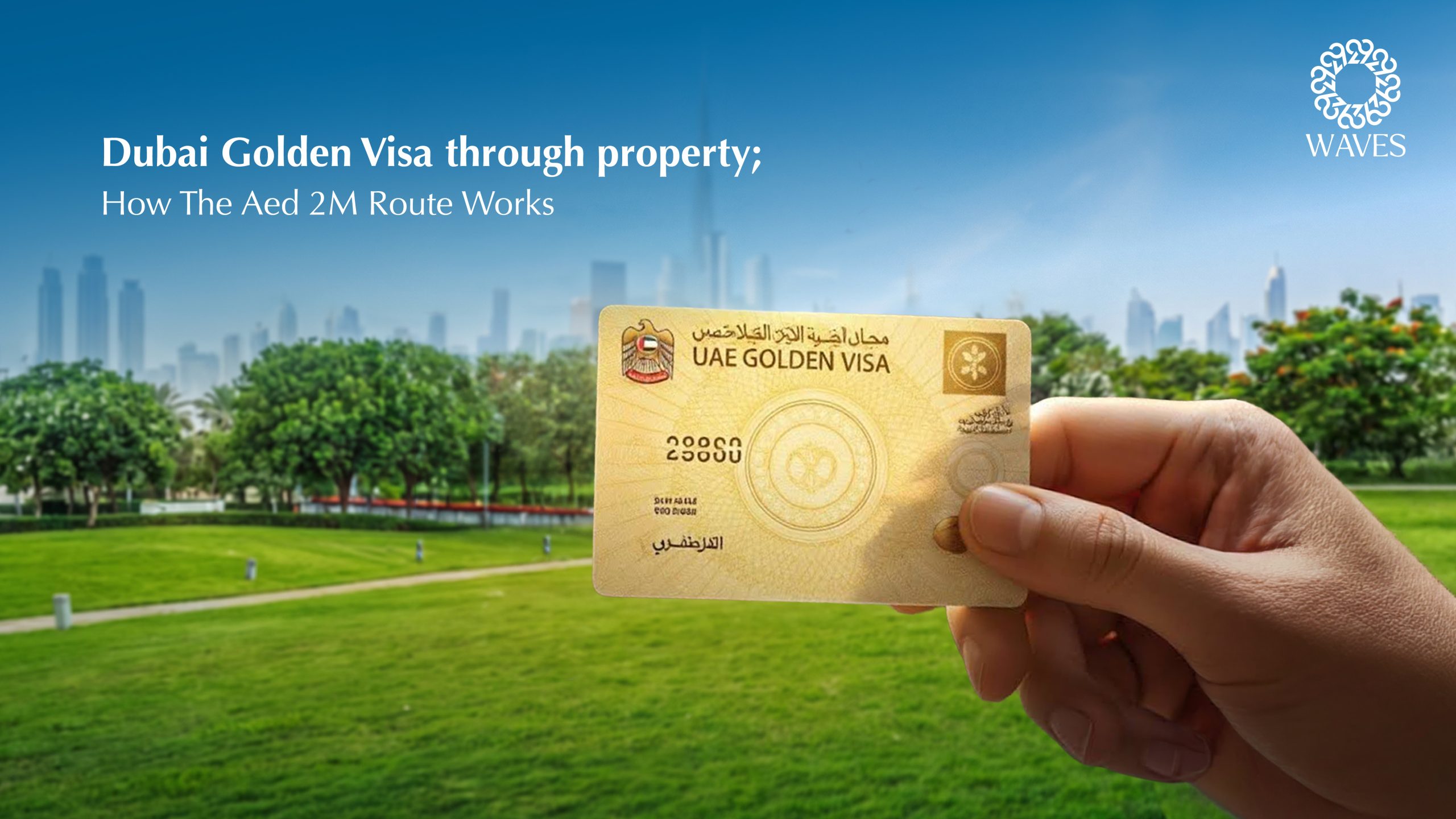
Dubai Golden Visa Through Property: How the AED 2 Million Route Works in 2026
The Dubai Golden Visa through property is the most direct way to turn a Dubai…
Is Dubai Property Really Tax-Free? What You Actually Pay in 2026
Is Dubai Property really tax-free? For you as an individual buyer, yes, on everything that…
Stay Updated
Join our newsletter to stay updated on the latest property listings and market trends.