Can a Non-Resident Get a Mortgage in Dubai?
You don’t need a UAE residency visa, a local job, or an Emirates ID to finance a property in Dubai; plenty of overseas investors already own here on a mortgage. What changes when you’re a non-resident is the size of the deposit, the paperwork the bank wants, and the pool of lenders willing to fund your file. This guide breaks down exactly what that looks like in 2026: the loan-to-value caps, the deposit you’ll actually part with, how EIBOR shapes your rate, and the rules that decide whether you get approved.
First, “non-resident” is not the same as “expat”
This trips up almost every first-time overseas buyer, so settle it upfront.
An expat resident holds a UAE residency visa and Emirates ID. They can borrow up to 80% loan-to-value (LTV) on a first property under the Central Bank’s standard rules.
A non-resident has no UAE visa; they live and earn abroad and are buying purely as an investor or second-home owner. Banks treat this profile as higher risk because there’s no local salary transfer and no UAE credit history. That single distinction is why your numbers look different from your friend who lives here.
How much can you borrow? The LTV caps
The Central Bank of the UAE sets the ceiling; individual banks can go stricter. For non-residents in 2026, the working numbers are:
- Ready (completed) property up to AED 5 million: up to 60% LTV, meaning a 40% down payment.
- Ready property above AED 5 million: typically 50% LTV, a 50% down payment.
- Off-plan property: most banks won’t finance off-plan for non-residents at all. Where they do, expect 50% LTV or lower, and often a developer payment plan is the more realistic route.
So the honest planning figure for a non-resident buying a ready home is 40% down, climbing to 50% for high-value or off-plan purchases.
On a AED 2,000,000 ready apartment at 60% LTV, that’s AED 800,000 as your deposit and AED 1,200,000 financed.
The costs that don’t go into the loan
For non-residents, the transaction fees cannot be rolled into the mortgage. They’re paid upfront in cash, on top of your deposit. Budget roughly 7.5%–8% of the purchase price:
- Dubai Land Department (DLD) transfer fee: 4% of the property value.
- Agency fee: typically 2%.
- Mortgage registration: 0.25% of the loan amount, plus admin.
- Property valuation: around AED 2,500–3,500.
- Bank processing fee: up to 1% of the loan.
On that same AED 2M apartment, that’s another ~AED 150,000–160,000 in cash. Factor it in before you sign a Memorandum of Understanding, not after.
EIBOR and how your rate is built
UAE variable mortgage rates aren’t a single number a bank invents. They’re built as EIBOR + a fixed bank margin.
EIBOR — the Emirates Interbank Offered Rate – is the benchmark rate at which UAE banks lend to each other, published by the Central Bank of the UAE. As of early July 2026, the UAE 3-month interbank rate sat at roughly 3.9%. Your bank then adds its margin (commonly ~1.5%–2.5%) on top, which is why non-resident variable rates land in the 4%–6% range depending on your profile and the property.
Two structures to know:
- Variable rate: priced as EIBOR + margin, so your payment moves as EIBOR moves. Because EIBOR tracks the UAE’s dollar-pegged monetary policy, it rises and falls with the broader rate cycle.
- Fixed rate: locked for an intro period (commonly 1–5 years), then it reverts to a variable EIBOR-linked rate. Good for payment certainty; usually starts slightly higher.
If you want to sanity-check the live benchmark before you commit, EIBOR is published on the Central Bank’s website (centralbank.ae), always price your offer off the current figure, not last year’s.
The rules that decide your approval
Beyond the deposit, a few hard rules govern non-resident lending:
- Freehold only. Banks finance freehold property in designated zones, not leasehold or unregistered developments.
- Maximum term: 25 years. The loan must be fully repaid by age 65 for salaried applicants and 70 for self-employed.
- Minimum income. Most lenders look for a stable monthly income in the region of AED 15,000–25,000 equivalent, though thresholds vary by bank.
- Offshore debt counts. Banks subtract your home-country loan and card obligations from your income when sizing what you can borrow. Clear what you can before applying.
- Pre-approval expires. Approvals are typically valid for 60 days, so line up the property inside that window.
Documents you’ll need
Non-residents get more scrutiny on “source of wealth,” so prepare a clean file:
- Valid passport (at least 6 months’ validity).
- Last 6 months’ personal bank statements.
- Proof of income — salary certificate and payslips, or audited accounts/trade licence if self-employed.
- Credit report from your home country.
- Proof of address.
- Evidence of the source of funds for your down payment.
A visible cash buffer above your deposit strengthens the application; it signals you can absorb the upfront fees and still hold liquidity.
The process, start to finish
- Assess eligibility — confirm your income, existing debt, and deposit before applying.
- Get pre-approved — secure a pre-approval letter so you house-hunt with a firm budget and negotiating power.
- Find the property and sign the MOU with the seller.
- Bank valuation — the lender orders an independent valuation.
- Final offer letter — the bank confirms terms and issues the mortgage offer.
- Transfer at the DLD — settle fees, register the mortgage, and take ownership.
Typical timeline: 3–6 weeks from application to approval, assuming documents are ready.
Conclusion
A Dubai mortgage as a non-resident is a standard, well-worn path, not an exception. The trade-off for skipping residency is a bigger deposit (plan for 40% on a ready home, 50% on higher-value or off-plan) and roughly 7.5%–8% in cash fees that can’t be financed. Get your documentation tight, price your rate off the live EIBOR, and stay inside your pre-approval window, and the rest is process.
Explore More Insights

Dubai Market Insights | H1 – 2026
Dubai Market Insights - What the H1 2026 Numbers Actually Show? Every quarter someone declares…
How to buy off-plan safely in Dubai?
Buying off-plan in Dubai means wiring real money toward a building that doesn't exist yet.…

Is a Dubai Property Correction Coming in 2026?
Is a Dubai property correction coming in 2026? For the past few years, Dubai's property…

Short-Term vs Long-Term Rental in Dubai
Ask ten property owners in Dubai which rental model earns more, and most will tell…
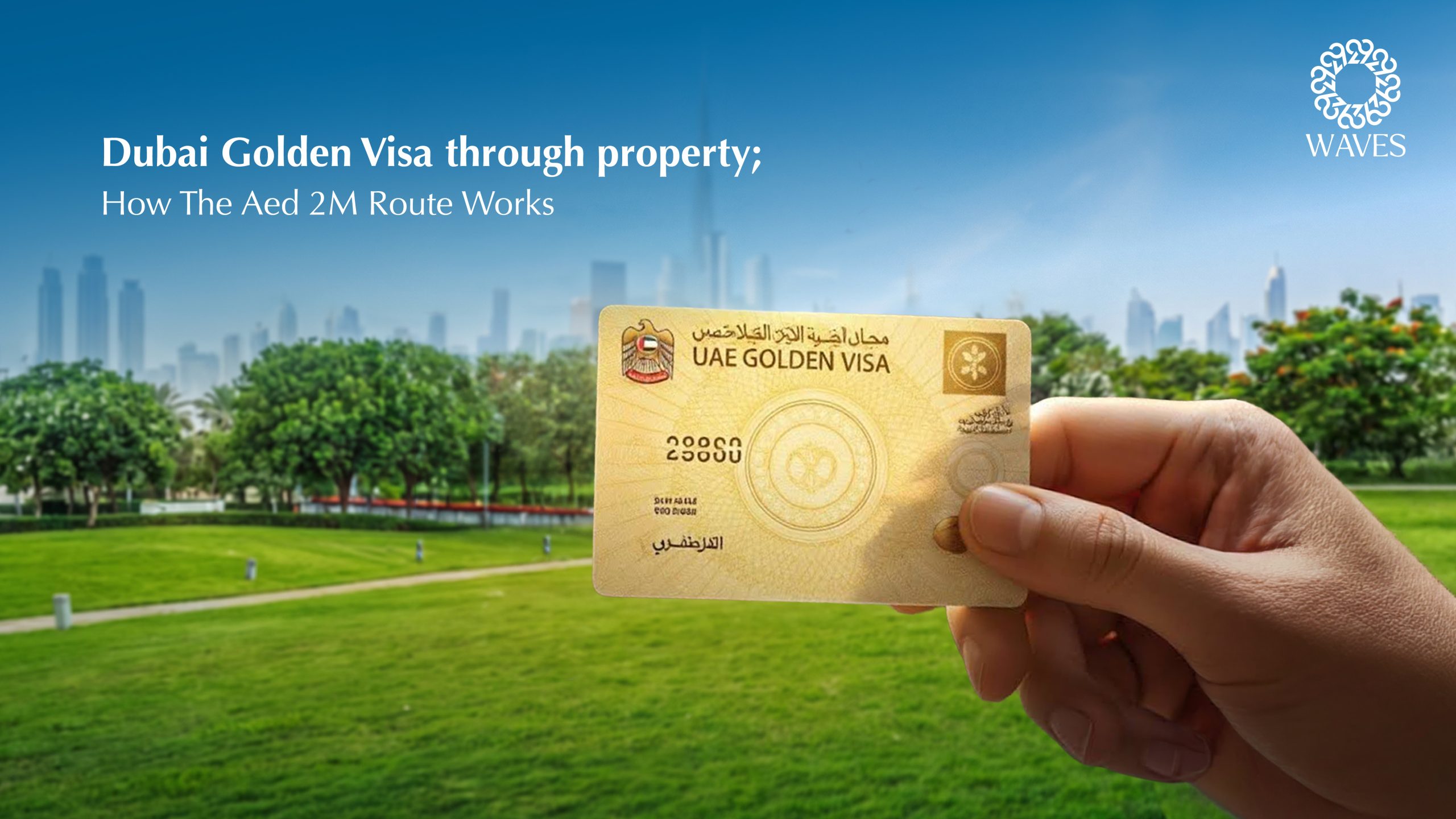
Dubai Golden Visa Through Property: How the AED 2 Million Route Works in 2026
The Dubai Golden Visa through property is the most direct way to turn a Dubai…
Is Dubai Property Really Tax-Free? What You Actually Pay in 2026
Is Dubai Property really tax-free? For you as an individual buyer, yes, on everything that…
Stay Updated
Join our newsletter to stay updated on the latest property listings and market trends.