How to buy off-plan safely in Dubai?
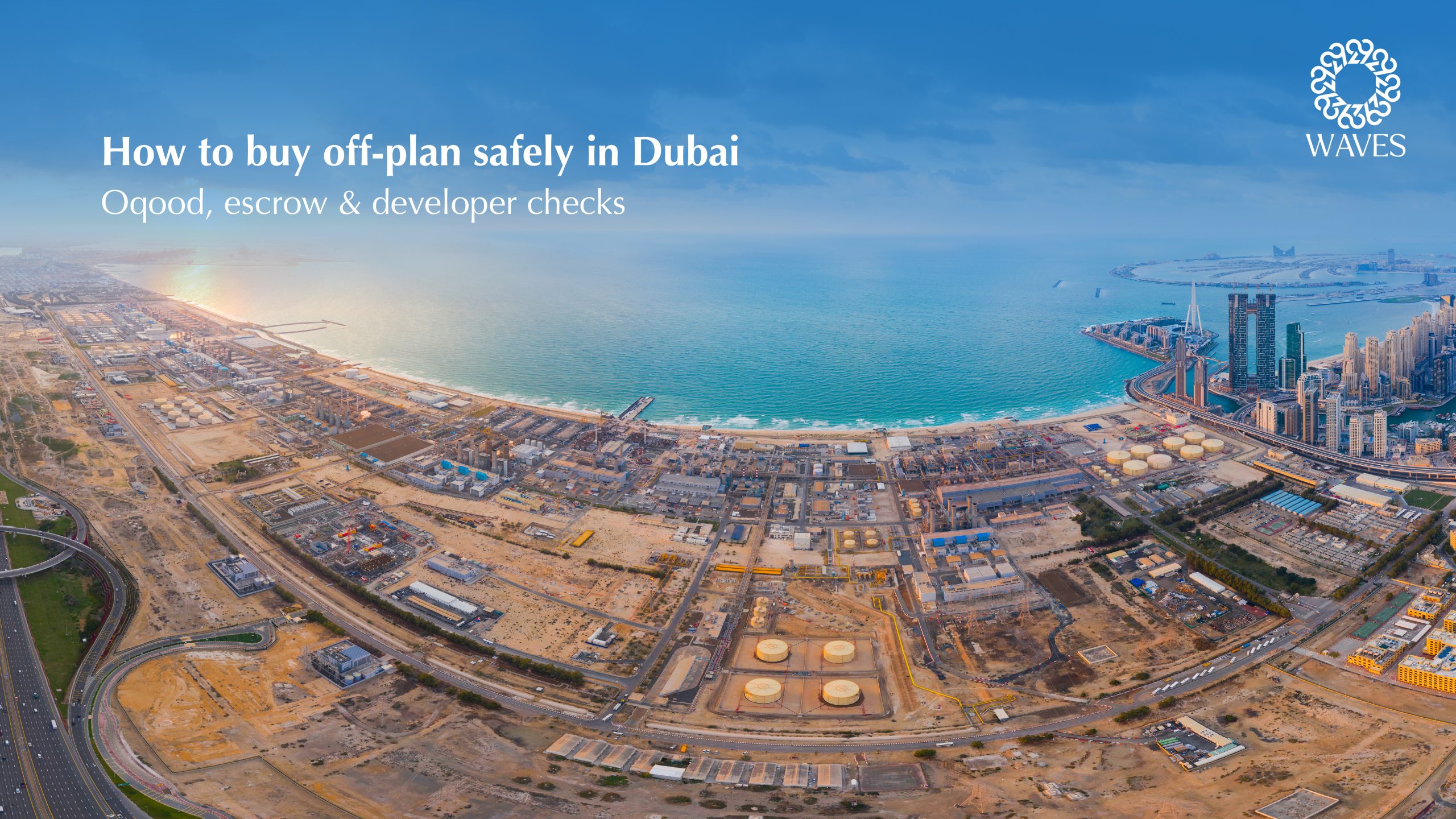
Buying off-plan in Dubai means wiring real money toward a building that doesn’t exist yet. That sentence scares a lot of first-time buyers off, and it shouldn’t. Off-plan now accounts for well over half of Dubai’s residential sales, and the emirate has built one of the tightest regulatory frameworks anywhere to protect the people paying in. The catch is that the system only works if you know which checks to run and actually run them before your deposit leaves your account.
Here’s exactly how the protection works, and the due diligence that separates a safe purchase from an expensive lesson.
Why Dubai off-plan isn’t the gamble it looks like
Go back far enough, and Dubai’s off-plan market really was risky. Developments were funded almost entirely by buyer instalments, which was fine while projects ran on schedule and a disaster when they stalled. So the government stepped in. Law No. 8 of 2007 created the escrow regime, the Dubai Land Department (DLD) took over registration and oversight, and its Real Estate Regulatory Agency (RERA) got the job of policing developers and brokers.
The result is a structure where your money is ring-fenced, your ownership is recorded before the keys exist, and every developer selling to you has to prove they’re licensed and financially backed. Three pillars hold it up: Oqood (your ownership record), escrow (where your money sits), and the developer and project checks you do yourself. Miss any one of them, and you lose the protection the other two give you.
Oqood: your proof of ownership before the building exists
“Oqood” is Arabic for “contracts,” and it’s the DLD’s official registration system for off-plan property. Once you sign your Sales and Purchase Agreement (SPA) and pay your booking amount, the developer is required to register the sale on the Oqood portal. You then receive an Oqood certificate, a digital record that makes you the legally registered owner of that specific unit, in that specific project, long before the title deed (Tasjeel) is issued at handover.
This is also the stage where you pay the 4% DLD registration fee. Good news buried in there: you don’t pay it twice. The 4% covers the whole lifecycle, and at handover your Oqood simply converts into a full title deed with no further transfer fee. Some developers even absorb part or all of the 4% as a sales incentive, so always confirm whether it’s included in the quoted price before you sign anything.
Do this: Your Oqood certificate is usually issued within about two to four weeks of signing the SPA, and the developer is legally required to register the sale within 90 days. Check it yourself on the free Dubai REST app using your passport or Emirates ID number. If it doesn’t appear, chase the developer — a missing or delayed Oqood registration is one of the clearest early warning signs that something is off.
One honest caveat: Oqood proves you own the unit and ties it to the project’s escrow account. It does not, on its own, guarantee the building gets finished on time. That’s what escrow and your developer checks are for.
Escrow: where your money actually goes
This is the single most important safeguard in the whole system, and the one buyers understand least. Under Law No. 8 of 2007, every off-plan project in Dubai must have its own dedicated escrow account, held at a bank that’s licensed by the UAE Central Bank and approved by RERA. When you pay your instalments, that money goes into the project’s escrow account — not into the developer’s pocket.
The developer can’t just help themselves. Funds are released to them in stages, and only as genuine construction milestones are certified by the escrow trustee: foundations, structure, finishing. Your payments are tied to real, verified progress on the ground. A few more layers sit on top of that:
- The account is ring-fenced from the developer’s creditors — nobody the developer owes money to can attach your funds.
- The bank retains 5% of the account even after completion is certified, releasing it only a year after the units are registered in owners’ names. That keeps the developer accountable through the snagging and early-occupancy period.
- A developer legally cannot accept a single dirham for an off-plan project until the escrow account is open and approved. If someone’s asking for payment before that exists, walk.
Do this: Ask the developer or your broker for the escrow bank name and account number for your specific project, then cross-check it on Dubai REST. Never transfer money to a personal account, a “holding” account, or the developer’s general company account. Escrow, or nothing.
Developer and project checks: do these before you pay anything
The regulation is strong, but it doesn’t check itself. Roughly 30–45 minutes on free government tools tells you whether a developer and project are legitimate — and that half hour is the cheapest insurance you’ll ever buy on a seven-figure purchase. Work through this in order.
Your pre-payment verification checklist
- Developer status. Search the developer’s exact name on Dubai REST or dubailand.gov.ae and confirm it reads Active. No entry, no deal.
- Project registration. Each project needs its own RERA registration and a Trakheesi advertising permit. Confirm both — a registered developer can still be marketing an unregistered project.
- Escrow account. Verify the escrow bank and account number exist for that project and match what you were told.
- Broker BRN. Buying through an agent? Check their Broker Registration Number is valid on Dubai REST.
- Track record. Pull the developer’s past projects and compare promised versus actual handover dates. On-time to six months late is normal; consistent 12-month-plus slippage across several projects means you price in delay before you commit.
- Freehold zone. As a foreign buyer, confirm the project sits in a designated freehold area so you actually get full ownership.
- SPA legal review. Have a DLD-registered lawyer read your Sales and Purchase Agreement before you sign. It typically costs AED 2,000–5,000 — a fraction of a percent on the deal, and non-negotiable.
Two free tools do almost all of this: the Dubai REST app (iOS and Android) and the DLD website. For anything they can’t resolve, the DLD call centre on 800-4488 will confirm it directly. Screenshot everything as you go — Oqood entries, escrow details, marketing brochures — so you have a documented trail if a dispute ever arises.
Red flags that should stop you cold
- Pressure to sign or pay “today” before the price disappears. Real due diligence takes days, not hours — the pressure itself is the warning.
- The developer or project doesn’t show up in DLD or RERA databases.
- You’re asked to pay into anything other than the project’s approved escrow account.
- Escrow or registration numbers that don’t match across the brochure, the SPA and Dubai REST.
- No Oqood certificate weeks after signing, with vague excuses when you ask.
- A title deed or approval sent as a WhatsApp screenshot instead of something you can verify officially.
Any one of these is enough to pause. There’s always another opportunity in Dubai’s market; there isn’t always a way to recover a deposit sent to the wrong hands.
The costs you’ll actually pay
So you can budget without surprises, here’s what lands on top of the unit price:
- 4% DLD registration fee, paid via Oqood (sometimes partly or fully covered by developer promotions).
- DLD admin fee of roughly AED 430 for an apartment, plus small knowledge and innovation fees.
- Trustee office fee of AED 2,000 for units under AED 500,000, or AED 4,000 at or above that, plus 5% VAT.
- Agent commission where applicable, typically 2% plus VAT.
All in, expect total buying costs of around 7–8% of the purchase price. Off-plan payment plans then spread the unit cost itself across construction, which is a big part of the appeal.
Frequently asked questions
Is buying off-plan property in Dubai safe?
Yes, when you use the system. Your money sits in a regulated escrow account and is released only against verified construction, and Oqood records your ownership before handover. The safety depends on buying from a RERA-registered developer, confirming the project’s escrow account, and getting your Oqood certificate — so the checks aren’t optional, they’re the protection.
What is Oqood in Dubai real estate?
It’s the DLD’s official off-plan registration system. The developer registers your purchase on the Oqood portal and you receive a certificate proving you own the unit until the title deed is issued at completion. The 4% DLD fee is paid at this point and isn’t charged again at handover.
How does an escrow account protect an off-plan buyer?
Every project must hold buyer payments in a dedicated, RERA-approved escrow account under Law No. 8 of 2007. Funds are released to the developer only as milestones are certified, the account is protected from the developer’s creditors, and 5% is held back until a year after handover.
How do I verify a developer is registered with RERA?
Search the developer’s exact name on the free Dubai REST app or the DLD website and confirm the status shows Active, then check the specific project’s registration, Trakheesi permit and escrow account. If nothing comes up, don’t proceed.
Do I pay the 4% DLD fee twice on off-plan?
No. The 4% paid at the Oqood stage covers the full lifecycle. At handover, your Oqood converts to a title deed with no additional transfer fee.
Waves Investments and Properties guides buyers through off-plan purchases in Dubai end to end, from verifying the developer and escrow account to reviewing your SPA and securing your Oqood registration. If you’re weighing a specific project, talk to our team before you sign.
This guide is general information based on current DLD and RERA regulations and is not legal advice. Verify all project and developer details through official DLD channels before committing funds.
Explore More Insights

Dubai Market Insights | H1 – 2026
Dubai Market Insights - What the H1 2026 Numbers Actually Show? Every quarter someone declares…
Is a Dubai Property Correction Coming in 2026?
Is a Dubai property correction coming in 2026? For the past few years, Dubai's property…
Short-Term vs Long-Term Rental in Dubai
Ask ten property owners in Dubai which rental model earns more, and most will tell…
Can a Non-Resident Get a Mortgage in Dubai?
You don't need a UAE residency visa, a local job, or an Emirates ID to…
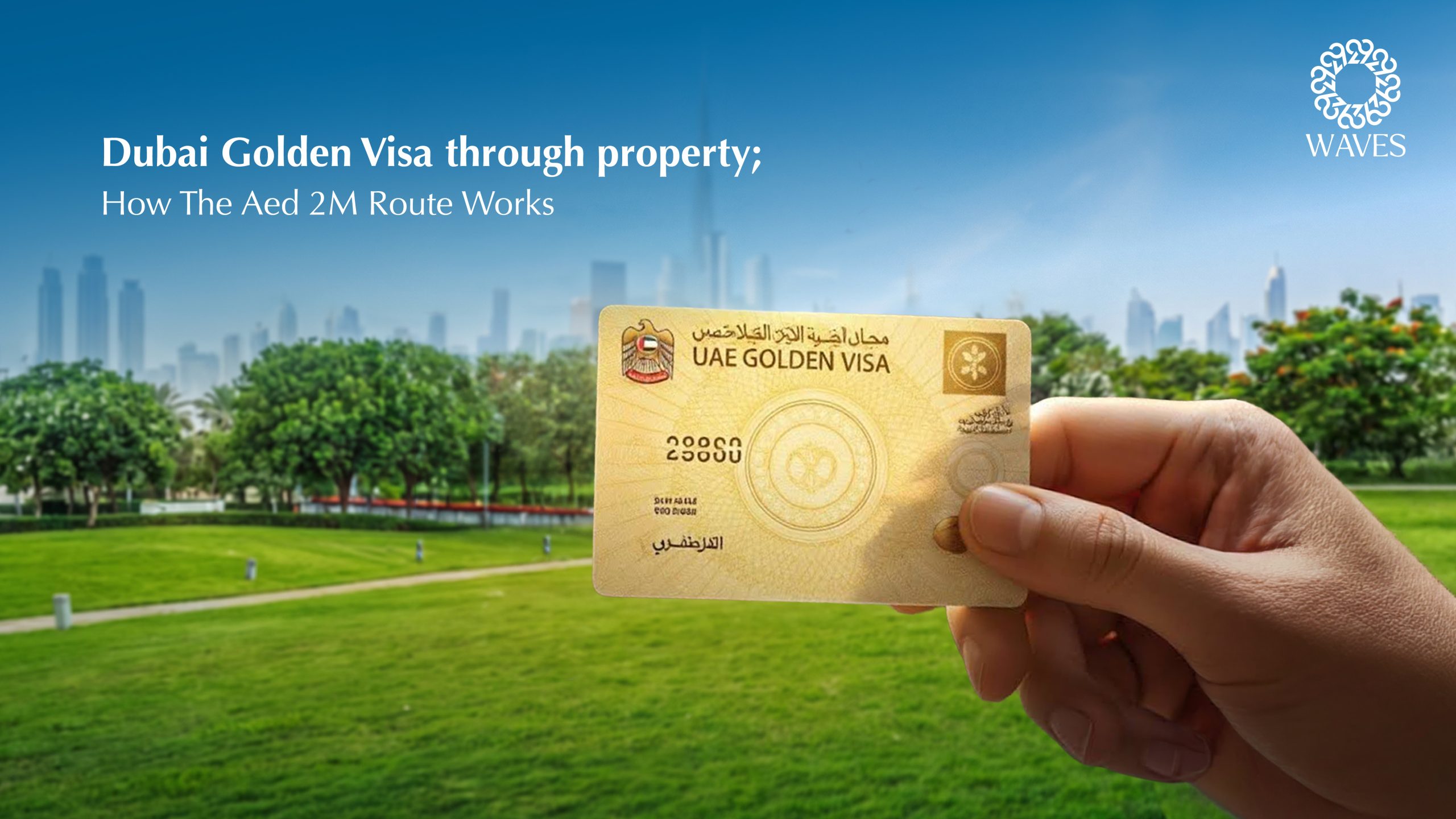
Dubai Golden Visa Through Property: How the AED 2 Million Route Works in 2026
The Dubai Golden Visa through property is the most direct way to turn a Dubai…
Is Dubai Property Really Tax-Free? What You Actually Pay in 2026
Is Dubai Property really tax-free? For you as an individual buyer, yes, on everything that…
Stay Updated
Join our newsletter to stay updated on the latest property listings and market trends.