Dubai Market Insights – 2025
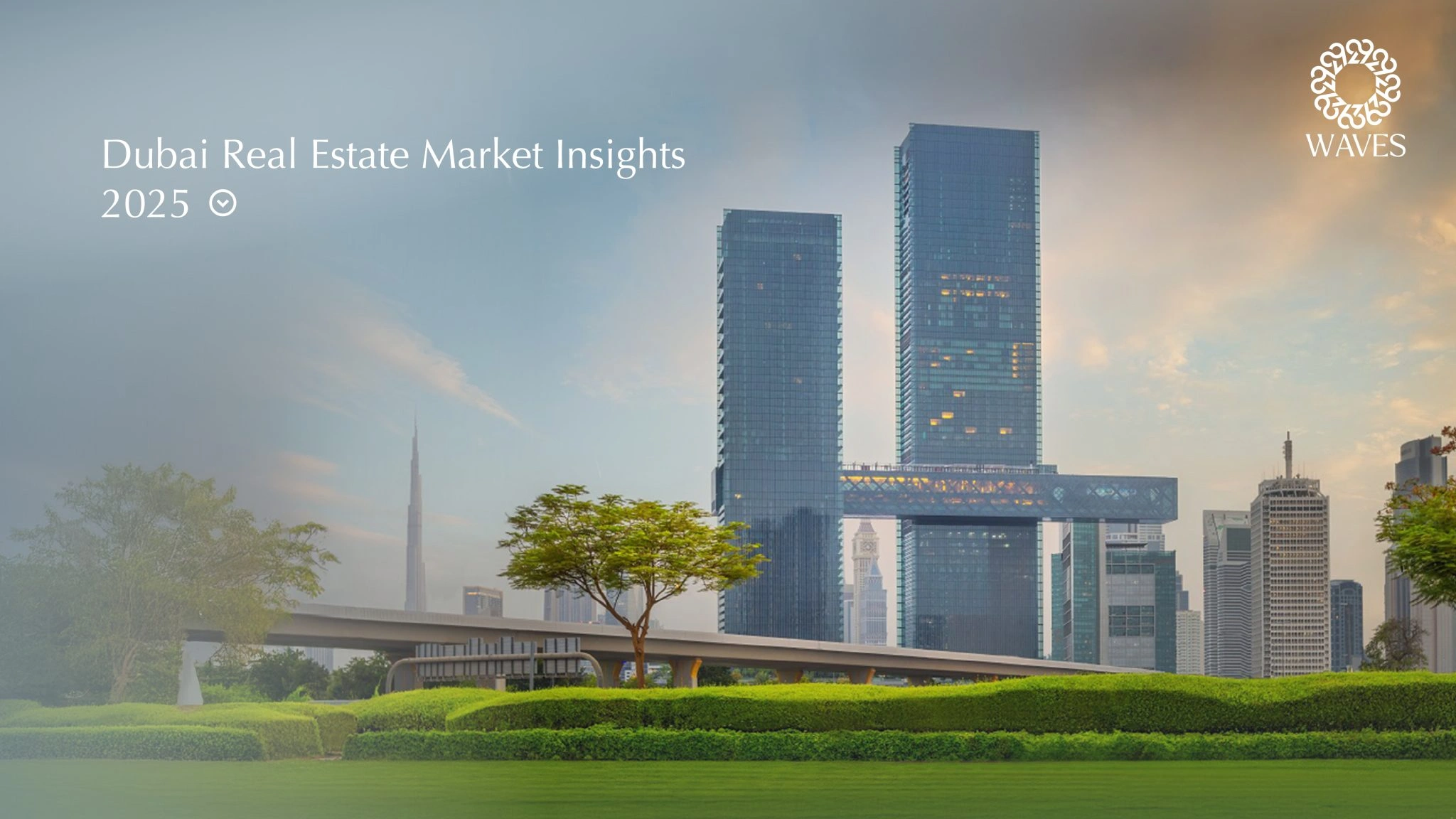
Dubai’s real estate market delivered a historic performance in 2025, setting new benchmarks in transaction value, volume, and investor confidence. According to data released by DXB Interact and the Dubai Land Department, Dubai’s real estate market recorded AED 917 billion in total property transactions in 2025, marking the strongest year ever in the emirate’s real estate history.
This performance reflects approximately 20% year-on-year growth in both transaction value and transaction volume, with around 270,000 property transactions recorded during the year. The scale and consistency of activity firmly position Dubai as one of the world’s most liquid and resilient real estate markets.
Market Drivers Behind the 2025 Surge
One of the key drivers of this growth was sustained population inflow. Dubai continued to attract global talent, entrepreneurs, and high-net-worth individuals, increasing demand for both ownership and rental properties.
Off-plan sales remained the dominant force in the market, accounting for approximately 69% of total transaction volume. Flexible payment plans, lower entry thresholds, and strong developer confidence continued to drive demand, particularly among long-term investors and first-time buyers.
At the same time, the resale market demonstrated resilience and maturity. While resale transactions formed a smaller share of total volume, ready properties experienced stronger price appreciation per square foot, reflecting limited supply in established communities and rising end-user demand.
Primary vs Resale Market Performance
The contrast between off-plan and resale segments became more pronounced in 2025. Off-plan projects drove volume and liquidity, while resale properties delivered higher ticket sizes and stronger price-per-square-foot performance. This dynamic highlights a balanced market where both investors and end-users find opportunities aligned with their risk profiles and timelines.
Supply Pipeline and Construction Outlook
Dubai’s development pipeline remains extensive, with more than 450,000 residential units under construction across over 1,400 active projects. However, a large portion of upcoming supply remains in early construction stages, indicating that meaningful delivery will be phased over the coming years rather than released all at once.
This staggered supply timeline has helped prevent market oversaturation, supporting price stability and continued demand for ready and near-completion properties.
Top Performing Areas and Developers
Several communities emerged as top performers in 2025, including Business Bay, Dubai Marina, Dubai South, DAMAC Islands, and Jumeirah Village Circle. These areas benefited from strong infrastructure, connectivity, and a diverse mix of residential offerings.
From a developer perspective, Emaar led the market in transaction value, while DAMAC and Binghatti followed closely with strong volume contributions. Nakheel and Sobha continued to play significant roles in shaping Dubai’s residential landscape.
Investor Outlook and Market Implications
Dubai real estate continued to offer attractive rental yields, typically ranging between 6% and 8% across major residential communities. The combination of strong yields, capital appreciation, and high market liquidity reinforced Dubai’s appeal to both regional and international investors.
The scale and consistency of transactions throughout 2025 indicate that market growth is being supported by genuine demand rather than short-term speculation. With controlled supply delivery and continued economic expansion, Dubai’s property market remains well-positioned for sustainable growth.
Conclusion
The year 2025 stands as a milestone in Dubai’s real estate journey. The record-breaking AED 917 billion in property transactions reflects not only market momentum but also sustained global confidence in Dubai as a long-term real estate destination. As the city moves into the next phase of development, the fundamentals point toward continued opportunities for investors, developers, and end-users alike.
Explore More Insights
How to buy off-plan safely in Dubai?
Buying off-plan in Dubai means wiring real money toward a building that doesn't exist yet.…
Is a Dubai Property Correction Coming in 2026?
Is a Dubai property correction coming in 2026? For the past few years, Dubai's property…
Short-Term vs Long-Term Rental in Dubai
Ask ten property owners in Dubai which rental model earns more, and most will tell…
Can a Non-Resident Get a Mortgage in Dubai?
You don't need a UAE residency visa, a local job, or an Emirates ID to…
Dubai Golden Visa Through Property: How the AED 2 Million Route Works in 2026
The Dubai Golden Visa through property is the most direct way to turn a Dubai…
Is Dubai Property Really Tax-Free? What You Actually Pay in 2026
Is Dubai Property really tax-free? For you as an individual buyer, yes, on everything that…
Stay Updated
Join our newsletter to stay updated on the latest property listings and market trends.